


Sorry for the inconvenience.
Search again what you are looking for

Reference: Piikki GA050
Hydraulic Breaker Piikki line hydraulic breaker for 10...15 t excavators. Piikki breakers are hydraulic demolition rock hammer / pecker and they are gas assisted. For many daily applications, excavation assistance, demolition etc. Very simple and reliable structure, cost effective solution you can rely on. The Piikki Series is built for versatility, daily...
Reference: Piikki Pro 250
Hydraulic Rock Breaker Piikki Pro 250 (25...40) 2300 kg Piikki Pro line hydraulic breaker for 25...40 t excavators.. Piikki Pro hydraulic rock breakers are fully hydraulically operated. For mine and quarry applications, excavation assistance, demolition, tunneling, boulder breaking, underwater etc. The membrane type breakers are fully hydraulically...
Reference: Yellow G 05
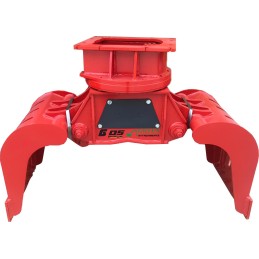
Demolition and Sorting Grapple Demolition and Handling Grapple Yellow G 05 (5…12t) (8 800 – 18 000 lb). Yellow line demolition and handling grapples designed for demolition and recycling applications. Structure of sorting grapple is light but robust which means energy savings and good productivity. Selector grabs for tough work Due to demolition and...
Reference: PB 10
Pilot boom PB for excavators Our range of PB pilot booms are designed for controlled pile installation. There can be a breaker or an auger mounted to the boom. Pilot Boom PB for Excavators is the ultimate solution for precise and efficient pile installation. Whether an auger or a breaker is installed, method of movement is same. There is an unit where...
Reference: Red AGR Pro 035
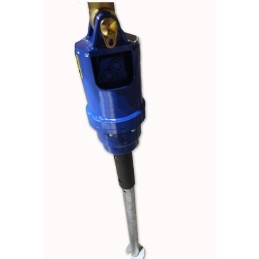
Hydraulic Auger Pro 035 AGR Pro line Hydraulic Augers for (2.0...5.0 t) excavators. AGR Pro hydraulic augers for excavators are designed for drilling holes, augers are an economical, robust solution for professionals. These earth drills can be used everywhere holes are needed by skid steer loaders, tractors, mini excavators, excavators, backhoe – loaders,...
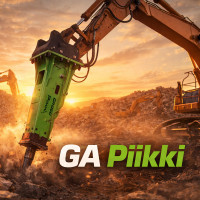
In earthmoving and demolition, efficiency is everything. One of the most vital tools for breaking tough materials like concrete or rock is the excavator hydraulic breaker (also known as a hammer).
However, choosing the wrong breaker can lead to more than just poor performance; it can cause premature machine wear or, worse, catastrophic hydraulic failure. This guide breaks down how to select the optimal hydraulic breaker by balancing weight classes, technical specs, and application needs.
A hydraulic breaker is an attachment that converts the carrier’s hydraulic power into high-impact energy. It is the go-to tool when a standard bucket fails: rock quarrying, breaking frozen ground, removing asphalt, and primary demolition.
The mechanism relies on a hydraulic piston and, often, a nitrogen gas chamber. The gas acts like a spring, enhancing the strike force while absorbing recoil to protect the excavator's boom.
The most critical factor in your search is the weight of the carrier machine. The breaker must be perfectly proportional to the excavator to ensure stability, safety, and longevity.
As a general rule, the breaker should weigh between 5% and 10% of the excavator’s total operating weight. Based on the Green Attachments range, breakers are categorized into three main tiers:
To ensure a perfect match, you must look beyond weight. Check your excavator’s hydraulic specs against these four metrics:
|
Specification |
Why it matters |
|
Oil flow (l/min) |
Determines speed. Too low, and the frequency drops; too high, and you risk mechanical damage. |
|
Operating pressure (bar) |
Must stay within the breaker’s range (e.g., 100–180 bar) to provide power without overloading relief valves. |
|
Impact rate (BPM) |
Blows per minute. High BPM is better for soft materials/asphalt; lower BPM with higher force is for hard rock. |
|
Impact energy (Joules) |
The "punch" of a single strike. Higher Joules are required for the toughest materials. |
The right breaker body is only half the battle; the tool bit (chisel) determines the result:
Choosing the right hydraulic hammer is a balance between machine size, hydraulic output, and the task at hand.
At Green Attachments, we specialize in matching the right attachment to your machine. A high-quality hydraulic breaker is an investment that pays for itself through increased uptime and durability.
Explore our full range of hydraulic breakers here and contact our experts for a custom quote!
Green Attachments Oy Benjami Pitkäsalo
📞 +358 45 697 1644📧 sales@greenattachments.com
Search again what you are looking for