


Sorry for the inconvenience.
Search again what you are looking for

Reference: Piikki GA050
Hydraulic Breaker Piikki line hydraulic breaker for 10...15 t excavators. Piikki breakers are hydraulic demolition rock hammer / pecker and they are gas assisted. For many daily applications, excavation assistance, demolition etc. Very simple and reliable structure, cost effective solution you can rely on. The Piikki Series is built for versatility, daily...
Reference: Piikki Pro 250
Hydraulic Rock Breaker Piikki Pro 250 (25...40) 2300 kg Piikki Pro line hydraulic breaker for 25...40 t excavators.. Piikki Pro hydraulic rock breakers are fully hydraulically operated. For mine and quarry applications, excavation assistance, demolition, tunneling, boulder breaking, underwater etc. The membrane type breakers are fully hydraulically...
Reference: Yellow G 05
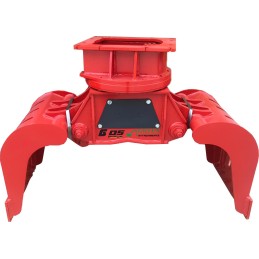
Demolition and Sorting Grapple Demolition and Handling Grapple Yellow G 05 (5…12t) (8 800 – 18 000 lb). Yellow line demolition and handling grapples designed for demolition and recycling applications. Structure of sorting grapple is light but robust which means energy savings and good productivity. Selector grabs for tough work Due to demolition and...
Reference: PB 10
Pilot boom PB for excavators Our range of PB pilot booms are designed for controlled pile installation. There can be a breaker or an auger mounted to the piling rig. Pilot Boom PB for Excavators is the ultimate solution for precise and efficient pile installation. Whether an auger or a breaker is installed to piling rig, method of movement is same. There...
Reference: Red AGR Pro 035
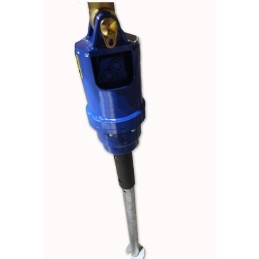
Hydraulic Auger Pro 035 AGR Pro line Hydraulic Augers for (2.0...5.0 t) excavators. AGR Pro hydraulic augers for excavators are designed for drilling holes, augers are an economical, robust solution for professionals. These earth drills can be used everywhere holes are needed by skid steer loaders, tractors, mini excavators, excavators, backhoe – loaders,...
The construction industry generates massive amounts of concrete waste every year. In Europe alone, demolition work produces hundreds of millions of tons of crushed concrete. Reusing this material is no longer just an environmental ideal—it is an economic necessity.
Tightening recycling regulations, rising landfill fees, and skyrocketing raw material prices have fundamentally changed the logic of demolition sites: concrete is no longer waste; it is a valuable raw material.
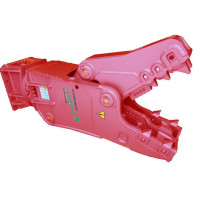
At the heart of efficient concrete recycling is the right excavator attachment. A hydraulic pulverizer crushes reinforced concrete structures in a controlled manner, separates rebar from the concrete, and produces reusable aggregate—directly on-site, eliminating the need for expensive intermediate transport.
Key Takeaway: Concrete is a valuable resource. A hydraulic pulverizer is the ultimate tool to unlock its value efficiently.
A hydraulic pulverizer is a specialized demolition attachment mounted on an excavator, designed specifically for crushing reinforced concrete and separating rebar.
Unlike a hydraulic breaker (rock hammer) that breaks concrete using impact force, a pulverizer uses a jaw or scissor-like mechanism to squeeze and crush structures in a controlled manner. The attachment utilizes the excavator’s hydraulic pressure to generate massive crushing force within its jaws.
A fixed pulverizer features a streamlined, robust design mounted directly to the excavator arm without a rotation mechanism. This makes it lighter and mechanically more durable than its rotating counterpart.
Green Attachments’ Yellow P series fixed pulverizers are engineered specifically for high-efficiency stockpile processing and handling concrete at ground level.
Typical Applications: Crushing concrete elements in stockpiles, processing foundation concrete, recycling yards, secondary bridge demolition, and infrastructure projects.
A rotating pulverizer sets itself apart with one game-changing feature: 360° continuous hydraulic rotation . This allows the operator to position the jaws at any precise angle without needing to reposition or turn the excavator itself.
Green Attachments’ Yellow R series rotating pulverizers are engineered for demanding demolition projects where speed, precision, and versatility are paramount.
Typical Applications: Urban demolition sites, bridge and tunnel dismantling, industrial factories, multi-story buildings, and high-pressure projects with tight deadlines.
|
Feature |
Fixed Pulverizer |
Rotating Pulverizer |
|
Purchase Price |
Lower |
Higher |
|
Weight |
Lighter |
Heavier (+ rotator unit) |
|
Maintenance Needs |
Low |
Slightly higher (rotator upkeep) |
|
Speed in Complex Sites |
Slower |
Faster |
|
Precision in Tight Spaces |
Limited |
Excellent |
|
Stockpile Crushing |
Excellent |
Good |
|
Operator Ergonomics |
Good in open environments |
Excellent in all environments |
|
Rebar Separation |
Highly Effective |
Highly Effective |
|
Suitability for Urban Demolition |
Moderate |
Excellent |
|
Return on Investment (ROI) |
Fast in smaller projects |
High in demanding/large projects |
Concrete recycling has grown into a highly lucrative sector within the demolition industry—driven not just by environmental responsibility, but by massive financial incentives. Using recycled concrete aggregate in road bases and backfills replaces the need for virgin stone aggregates and slashes material transportation logistics.
Real-World Example: When demolishing a 10,000 m² factory building, you typically generate 3,000 to 5,000 tons of concrete waste. An excavator equipped with a pulverizer can process this entire mass right on the spot—crushing the concrete, separating the rebar, and leaving behind clean, ready-to-use or ready-to-sell aggregate.
Selecting the perfect pulverizer requires evaluating a few critical factors:
Unsure which model fits your fleet? The experts at Green Attachments are ready to help you find the optimal solution for your excavator and upcoming projects. Contact us at greenattachments.com/en/contact-us.
Green Attachments supplies premium excavator attachments to professionals across Europe. The Yellow series pulverizers are explicitly engineered to withstand the harshest Nordic conditions:
A hydraulic pulverizer is an excavator attachment that crushes concrete and cuts steel rebar using powerful hydraulic compression. It is widely used in building demolition, structural dismantling, and concrete recycling.
A fixed pulverizer is attached directly to the excavator arm without rotation capability—it is lighter and more affordable but requires moving the excavator more frequently. A rotating model features a 360° hydraulic rotator, allowing the operator to aim the jaws at any angle seamlessly.
Yes. Pulverizers feature interchangeable internal cutting blades that shear through steel rebar as the concrete is being crushed. This allows for clean, highly efficient metal separation right during the demolition phase.
The smallest models can be mounted on 3–6 ton mini-excavators, while the largest heavy-duty units require 20–45 ton demolition machines. The primary sizing criteria include your machine’s hydraulic flow, operating pressure, and boom lifting capacity.
Absolutely. Clean concrete aggregate produced by a pulverizer is ideal for road bases, structural backfills, and earthworks. Once the rebar is removed, the aggregate meets recycled raw material standards in most jurisdictions.
Blade lifespan depends completely on the hardness of the processed material and operating hours. Typically, blades last for hundreds of operating hours. Green Attachments maintains a comprehensive inventory of spare parts for rapid replacement.
Yes, both fixed and rotating models are excellent for crushing bridge concrete. However, the rotating model is often preferred because heavily reinforced bridge structures require precise jaw alignment from awkward angles.
Simply fill out the quote request form on our product page, or contact our sales team directly via phone at +358 45 697 1644 or email at sales@greenattachments.com.
On-site concrete recycling is no longer a trend of the future—it is a modern competitive advantage. Investing in a hydraulic pulverizer pays for itself incredibly fast through minimized haulage costs, eliminated landfill fees, and direct revenue from recycled aggregate sales.
Ready to find out which model matches your excavator and next project? Get in touch with our experts or request a quote directly:
🌐 Website: greenattachments.com/en/contact-us 📞 Phone: +358 45 697 1644
Internal Quick Links
Search again what you are looking for