


Sorry for the inconvenience.
Search again what you are looking for

Reference: Piikki GA050
Hydraulic Breaker Piikki line hydraulic breaker for 10...15 t excavators. Piikki breakers are hydraulic demolition rock hammer / pecker and they are gas assisted. For many daily applications, excavation assistance, demolition etc. Very simple and reliable structure, cost effective solution you can rely on. The Piikki Series is built for versatility, daily...
Reference: Piikki Pro 250
Hydraulic Rock Breaker Piikki Pro 250 (25...40) 2300 kg Piikki Pro line hydraulic breaker for 25...40 t excavators.. Piikki Pro hydraulic rock breakers are fully hydraulically operated. For mine and quarry applications, excavation assistance, demolition, tunneling, boulder breaking, underwater etc. The membrane type breakers are fully hydraulically...
Reference: Yellow G 05
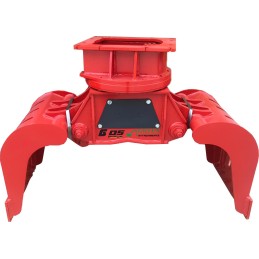
Demolition and Sorting Grapple Demolition and Handling Grapple Yellow G 05 (5…12t) (8 800 – 18 000 lb). Yellow line demolition and handling grapples designed for demolition and recycling applications. Structure of sorting grapple is light but robust which means energy savings and good productivity. Selector grabs for tough work Due to demolition and...
Reference: PB 10
Pilot boom PB for excavators Our range of PB pilot booms are designed for controlled pile installation. There can be a breaker or an auger mounted to the boom. Pilot Boom PB for Excavators is the ultimate solution for precise and efficient pile installation. Whether an auger or a breaker is installed, method of movement is same. There is an unit where...
Reference: Red AGR Pro 035
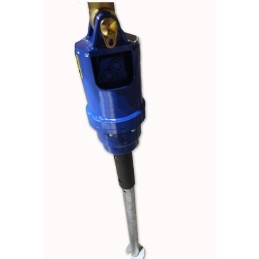
Hydraulic Auger Pro 035 AGR Pro line Hydraulic Augers for (2.0...5.0 t) excavators. AGR Pro hydraulic augers for excavators are designed for drilling holes, augers are an economical, robust solution for professionals. These earth drills can be used everywhere holes are needed by skid steer loaders, tractors, mini excavators, excavators, backhoe – loaders,...
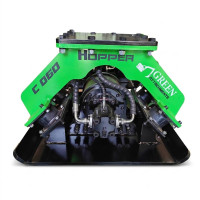
Poorly compacted soil is a silent problem in construction. It might not be visible immediately, but after a few years, it manifests as subsidence, cracks, damaged pipelines, and expensive repair projects. A hydraulic compacting plate is an attachment that solves this problem efficiently, right from the excavator boom. When compaction is done properly from the start, the structure lasts for decades.
On construction sites, soil compaction is a step that often receives insufficient attention, especially when schedules are tight. The backfill layer is poured into the trench, hastily rammed by hand with a manual tamping rammer, and left hoping for the best. The end result is unpredictable. A hydraulic compacting plate changes this equation completely: the work is done directly from the machine—faster, more evenly, and with greater safety.
A compacting plate is a hydraulic attachment mounted on an excavator used to compact soil, backfill aggregate, sand, or other loose materials. The device is attached to the excavator boom in the same way as a bucket, and it draws its operating power from the machine's hydraulic system.
The operating principle is simple: a hydraulic motor rotates an eccentric rotator inside the device, creating strong vibration. This vibration is transmitted through rubber buffers to the compactor plate and into the ground, causing the soil particles to rearrange into a dense structure. The result is a load-bearing, stable, and uniformly compacted foundation.
Compared to a walk-behind wacker plate, a hydraulic excavator compacting plate offers major advantages. A walk-behind plate requires a dedicated operator working on foot—and in a trench or on the edge of an embankment, this means working in a hazardous zone. With an excavator compacting plate, everything is handled from the cab: the driver guides the attachment to the desired spot, and compaction takes place within the boom's reach without anyone entering the danger zone.
In civil engineering, a compacting plate is an almost indispensable tool. Water mains, sewer pipes, and stormwater networks are installed by digging deep trenches that must be filled layer by layer. Each layer must be compacted properly before adding the next—otherwise, the pipe bedding and surrounding backfill will settle over time.
Practical Example: A utility contractor replaced manual rammers with a Hopper compacting plate. Previously, each trench required two workers for manual ramming and one excavator operator for backfilling. With the Hopper plate, the operator handles the entire operation alone, and the compaction speed is multiplied.
When building sewage trenches, an excavator compactor proves its worth especially in narrow trenches where walk-behind equipment is clumsy to handle. Backfills around French drains and subsoil drainage also require meticulous compaction to prevent frost damage.
Cable channels are often narrow—perhaps 30–50 cm wide. Working with a manual tamping rammer in such trenches is awkward, but a smaller-scale hydraulic compacting plate fits perfectly. Cable backfills must be sufficiently compacted to ensure the ground does not settle later, which could cause damage to the cables or the overlying pavement.
When building foundations, footing trenches are partially backfilled and compacted. A compacting plate is ideally suited for subfloor backfills of floor structures as well as compacting next to plinths and frost insulation walls.
In road base preparation, soil compaction is directly linked to the lifespan of the road. A hydraulic excavator compactor complements a heavy soil roller, particularly in spots where the roller cannot operate—such as shoulders, curb edges, and bridge abutment backfills.
Fill embankments, retaining wall backfills, and green area sub-bases all require sufficient compaction. Slope compaction is especially crucial for preventing erosion.
This is undisputedly the most important argument. Manual tamping work in trenches is one of the highest-risk tasks on a construction site. Trench walls can collapse, spaces can be confined, and oxygen levels may be insufficient. With a hydraulic compacting plate, the excavator operator performs the compaction work from a safe distance—sitting inside the protected cab. Cave-ins are a real risk in sewage and pipeline trenching where soil pressure against the walls increases heavily with depth. When no one needs to stand in the trench to compact, the risk of personal injury due to collapses is practically eliminated.
A single excavator operator can handle both backfilling and compacting. The need for a separate ground-crew tamping team is removed. On smaller projects, this can mean the entire compaction phase is up to three times faster compared to traditional manual ramming. Field reports from pipeline sites show that using an excavator-mounted compacting plate halved the duration of the compaction stage. On a 200-meter pipeline project, days' worth of man-hours can easily be saved.
A hydraulic compacting plate delivers a more even and measurably better compaction result than manual methods. The device works systematically, the vibration force remains constant, and the quality of the compaction does not depend on how tired or rushed a worker is. In foundation work, this translates to fewer late settlements, minimizing complaints and costly warranty repairs.
A dedicated ground worker or tamping crew is an added expense. With a hydraulic compacting plate, the excavator operator manages digging, backfilling, and compaction. This not only cuts down on payroll expenses but also simplifies site management and reduces coordination needs.
A heavy ride-on roller is efficient on large, open terrains. An excavator-mounted compacting plate goes where a roller cannot fit: into narrow trenches, next to building foundations, on steep slopes, and close to existing structures. The reach of the boom also allows compaction in locations where physical access would otherwise be difficult or dangerous.
A comparison between three compaction methods highlights exactly where the hydraulic compacting plate excels:
|
Feature |
Walk-Behind Wacker Plate |
Vibratory Soil Roller |
Hydraulic Compacting Plate |
|
Labor Requirement |
1–2 persons |
1 person |
Excavator operator |
|
Trench Safety |
Poor |
Not suitable |
Excellent |
|
Narrow Trenches |
Limited |
Not suitable |
Excellent |
|
Slopes / Embankments |
Difficult |
Difficult |
Good |
|
Compaction Force |
Moderate |
High |
High |
|
Uniform Quality |
Variable |
Good |
Excellent |
|
Speed |
Slow |
Fast in open areas |
Fast in all conditions |
|
Site Flexibility |
Good |
Limited |
Excellent |
|
Investment Cost |
Low |
High |
Moderate as an attachment |
As the table shows, a hydraulic compacting plate is not the ultimate tool for every single situation—vast, open surfaces are best suited for soil rollers. However, in the most typical compaction scenarios encountered on construction sites—trenches, confined spaces, and embankments—it is clearly the superior choice.
Selecting the correct compacting plate starts with the weight class of the excavator. The attachment must be sized appropriately to match the machine: a plate that is too light will not perform efficiently on a large excavator, while a plate that is too heavy can overload a small machine excessively.
Green Attachments' Economy line Hopper C series covers a wide spectrum:
A hydraulic compacting plate requires sufficient oil flow and pressure from the carrier. Before purchasing, check your excavator's hydraulic specifications and compare them with the attachment's requirements. Technical advice for selecting the proper model is available from the manufacturer or dealer.
Smaller models (020, 040) are perfect for narrow trenches and compact jobsites. Larger models (060, 080, 100) are built for heavy infrastructure construction, where massive compaction force and wide surface coverage are required.
Sand and gravel compact much easier than clay or moraine. For cohesive clay soils, more compaction passes might be required, and the thickness of each layer per fill must be thinner. The technical performance of the attachment remains constant, but the compaction plan must always be adapted to the material type.
Green Attachments is a company specialized in excavator attachments. The Hopper C compacting plate series has been engineered to meet the strict demands of professional construction, keeping the harsh Nordic operating conditions in mind.
Efficiency improvements are substantial—and they show up directly in reduced project costs.
What is a hydraulic compacting plate? A hydraulic compacting plate is an excavator attachment that uses powerful vibration to compact soil and earth materials. The device runs off the carrier's hydraulic system and is operated directly from the cab.
Which excavators are these compacting plates suitable for? Green Attachments' Hopper C series covers excavators from 2 tons to 40 tons. The correct model is chosen based on the machine's weight class.
Can a compacting plate handle clay soil? Yes, but in clay soils, the thickness of each backfill layer must be smaller, and more compaction passes are required compared to coarser materials. A high-quality finish is fully achievable with the correct working methods.
Does the compacting plate require a dedicated hydraulic circuit? In most cases, the attachment is connected to the excavator's existing auxiliary hydraulics. Precise connection details vary by machine, so it is recommended to verify compatibility with the sales team before purchase.
How fast can a compacting plate be mounted on an excavator? Installation usually takes only a few minutes. The attachment hooks onto the excavator boom just like other implements, and the hydraulic hoses are connected to the machine's quick couplers.
Is a compacting plate better than a vibratory soil roller? It depends entirely on the application. A soil roller is highly efficient on vast, open areas. An excavator compacting plate is superior in trenches, on slopes, in confined spaces, and in scenarios where operator safety is a critical factor.
How much does a compacting plate weigh? In the Hopper C series, the weight ranges from 110 kg (smallest model) up to 950 kg (largest model). The attachments are engineered to match the lifting capacities of respective excavators.
Can you compact asphalt with a compacting plate? Compacting plates are designed primarily for soil, earth, and aggregate compaction. Dedicated asphalt compactors or rollers should be used for asphalt paving.
How deep does the compaction effect reach? In practice, the vibration penetrates to a depth of approximately 20–50 cm, depending on the soil layer. This is why backfilling is always performed in layers, compacting each before applying the next.
How do I ensure that the compaction is sufficient? Compaction density can be measured using a Plate Load Test (PLT) or other geotechnical measurement practices. The quality control plan of the specific construction project defines the required compaction rate.
Can a compacting plate be used safely on embankment edges? Yes—this is one of its clearest advantages. The operator manipulates the attachment onto the slope surfaces using the excavator boom, staying completely clear of any cave-in risks.
An excavator compacting plate is an investment that pays for itself rapidly—through saved labor, upgraded jobsite safety, and superior foundation quality. A hydraulic compactor plate replaces a separate manual tamping crew, reaches areas where a roller cannot fit, and ensures safe operation even in hazardous environments. Foundation engineering is the groundwork of construction in the most literal sense. Doing it right from the start avoids kinking budgets on rectifications down the road. The right compaction equipment is a central pillar of this success.
Explore Green Attachments' premium compacting plates and find the perfect match for your excavator. Contact our experts and request a quote today.
Search again what you are looking for