


Sorry for the inconvenience.
Search again what you are looking for

Reference: Piikki GA050
Hydraulic Breaker Piikki line hydraulic breaker for 10...15 t excavators. Piikki breakers are hydraulic demolition rock hammer / pecker and they are gas assisted. For many daily applications, excavation assistance, demolition etc. Very simple and reliable structure, cost effective solution you can rely on. The Piikki Series is built for versatility, daily...
Reference: Piikki Pro 250
Hydraulic Rock Breaker Piikki Pro 250 (25...40) 2300 kg Piikki Pro line hydraulic breaker for 25...40 t excavators.. Piikki Pro hydraulic rock breakers are fully hydraulically operated. For mine and quarry applications, excavation assistance, demolition, tunneling, boulder breaking, underwater etc. The membrane type breakers are fully hydraulically...
Reference: Yellow G 05
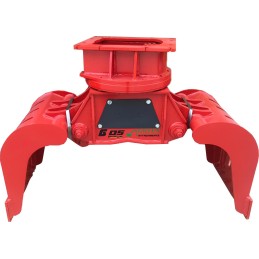
Demolition and Sorting Grapple Demolition and Handling Grapple Yellow G 05 (5…12t) (8 800 – 18 000 lb). Yellow line demolition and handling grapples designed for demolition and recycling applications. Structure of sorting grapple is light but robust which means energy savings and good productivity. Selector grabs for tough work Due to demolition and...
Reference: PB 10
Pilot boom PB for excavators Our range of PB pilot booms are designed for controlled pile installation. There can be a breaker or an auger mounted to the piling rig. Pilot Boom PB for Excavators is the ultimate solution for precise and efficient pile installation. Whether an auger or a breaker is installed to piling rig, method of movement is same. There...
Reference: Red AGR Pro 035
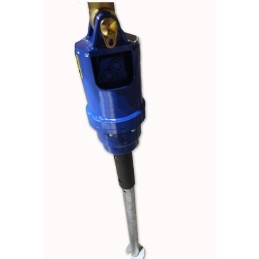
Hydraulic Auger Pro 035 AGR Pro line Hydraulic Augers for (2.0...5.0 t) excavators. AGR Pro hydraulic augers for excavators are designed for drilling holes, augers are an economical, robust solution for professionals. These earth drills can be used everywhere holes are needed by skid steer loaders, tractors, mini excavators, excavators, backhoe – loaders,...
An excavator is one of the most versatile machines in construction and earthmoving, but its true potential is determined by the attachment mounted at the end of the boom. Choosing the right excavator attachment can speed up the job, reduce wear on both the excavator and attachment, and improve the final result – whether you are working in demolition, recycling or earthmoving.
An incorrectly sized attachment, on the other hand, can quickly become expensive: the hydraulic system may be unnecessarily overloaded, work becomes slower and downtime increases. In this guide, we explain what to check before purchasing an attachment – from excavator size and hydraulic requirements to the application and attachment weight.
We have put together this guide based on the questions our customers most frequently ask before ordering an attachment. If you are unsure about any of the points below, feel free to contact us directly. Finding the right attachment is much easier after a few key details about the machine and application have been confirmed.
The first question is not how large your excavator is, but what you need to accomplish with it. Breaking concrete, pulverizing material, cutting metal, sorting materials and drilling holes all require different types of attachments.
|
Application |
Typical Requirement |
|
Demolition work |
Breaking and handling structures and foundations |
|
Concrete breaking and pulverizing |
Reducing concrete and separating reinforcement |
|
Metal and steel cutting |
Cutting structures into pieces for recycling |
|
Material sorting |
Separating demolition and recycling waste into different fractions |
|
Scrap handling and recycling |
Handling metal and concrete at recycling facilities |
|
Drilling and piling |
Fence posts, foundations and screw piles |
|
Soil compaction and asphalt work |
Finishing groundwork and surface structures |
Once the application is clear, choosing the right type of attachment becomes much easier. The remaining step is mainly about matching dimensions and hydraulic requirements.
Attachments are generally selected first according to the excavator's operating weight. For example, the Green Attachments hydraulic breaker range covers excavators from approximately 0.7 to 60 tonnes, while AGR Pro earth augers are designed for machines from approximately 0.75 to 45 tonnes. This means suitable options are available for everything from mini excavators to large tracked excavators.
However, operating weight alone does not determine compatibility. The following factors also need to be considered to ensure that the attachment works properly as part of the complete machine system.
|
Factor |
Why It Matters |
|
Attachment weight |
Affects the excavator's lifting capacity and stability |
|
Excavator lifting capacity |
Determines how heavy an attachment the machine can safely carry at full reach |
|
Boom and stick design |
Affects reach and working angle |
|
Hydraulic flow and operating pressure |
The attachment will only perform correctly with the required flow and pressure |
|
Hydraulic connections and quick coupler |
Determines whether the attachment can be installed on the excavator |
Remember: the attachment must be compatible with the entire working system, not just the excavator's weight class.
Hydraulic attachments use the excavator's hydraulic system, making hydraulic specifications one of the most important selection criteria. Check the following before placing your order:
|
Check |
Question to Answer |
|
Hydraulic flow (l/min) |
How much hydraulic oil can the excavator supply to the attachment? |
|
Hydraulic pressure (bar) |
At what operating pressure is the attachment designed to work? |
|
Return oil |
Does the attachment require a free return line or separate return hydraulics? |
|
Auxiliary hydraulics |
Does the excavator have the hydraulic functions required to operate the attachment? |
|
Hoses and couplings |
Are the connections correctly sized and compatible? |
Physical compatibility alone is not enough. The hydraulic specifications of the excavator and attachment must also match numerically.
If you are unsure about your excavator's hydraulic flow or operating pressure, the information can usually be found on the machine specification sheet or in the manufacturer's operating manual. Providing these figures when requesting a quotation can significantly speed up the process of finding the right attachment.
A heavier attachment does not automatically mean more efficient work. An attachment that is too heavy can reduce lifting capacity, limit reach, affect machine stability and increase the load on the boom and stick. An attachment that is too light, on the other hand, may not withstand the demands of the application.
The attachment's weight should therefore always be considered in relation to the excavator's size, working reach and the type of work being performed. For example, when choosing an earth auger, a larger excavator does not automatically mean that you should select the largest possible auger. In the Green Attachments range, auger size is selected according to the application, rather than simply the maximum size of the excavator.
The material being processed has a major impact on attachment selection. The table below summarizes some of the most common materials and suitable attachment types.
|
Material |
Recommended Attachments |
Consideration |
|
Concrete |
Hydraulic breaker, pulverizer, demolition grapple |
A pulverizer can also be used to separate reinforcement; Green Attachments rotating models offer 360° rotation for easier operation in confined spaces |
|
Stone and rock |
Hydraulic breaker |
The correct breaker size depends on both the excavator and the hardness of the material |
|
Metal and steel |
Scrap grapple, cutter, hydraulic magnet |
A magnet speeds up the separation of metal from demolition waste |
|
Soil and ground |
Hydraulic earth auger |
Suitable for fence posts, foundations, piles and planting applications |
In many applications, a single attachment can perform several stages of the job. This is a major advantage when different materials need to be processed on the same site.
For example, a pulverizer can be used to crush concrete, reduce concrete pieces, process reinforced concrete and prepare material for recycling. Similarly, different tools can be selected for an earth auger depending on the application.
The result: multifunctional attachments reduce the time spent changing tools and reduce the need to transport several separate machines to the worksite.
|
Feature |
Rotating Attachment |
Fixed Attachment |
|
Movement |
Greater – makes positioning easier |
More limited, but sufficient for many applications |
|
Best suited for |
Demolition, sorting, confined spaces and recycling |
Applications where additional rotation is not required |
|
Design |
More complex |
Simpler and often more economical |
The Green Attachments range includes both rotating and fixed pulverizers and demolition/sorting grapples, allowing the choice to be based entirely on the requirements of the application.
An attachment is not ready for use unless it can be safely installed on the excavator.
Correctly sized mounting ensures that the attachment operates as intended and can be used safely.
The purchase price is only one part of the total cost. When comparing attachments, also consider:
If an attachment saves even one working day per week, the productivity benefit can often be many times greater than the difference in purchase price. It is therefore worth calculating the total cost of ownership over the attachment's entire service life, rather than looking only at the initial purchase price.
|
Attachment |
Typical Application |
|
Hydraulic breaker |
Breaking concrete, stone and rock |
|
Demolition grapple |
Handling and sorting demolition materials |
|
Sorting grapple |
Sorting and handling materials |
|
Pulverizer |
Pulverizing concrete and separating reinforcement |
|
Scrap grapple |
Handling scrap and metal |
|
Scrap cutter |
Cutting metal and structures |
|
Hydraulic magnet |
Collecting and sorting ferrous scrap |
|
Earth auger |
Drilling holes and foundations |
|
Hydraulic compaction plate |
Compacting soil and fill materials |
|
Screening bucket |
Screening soil and other materials |
|
Asphalt planer |
Milling asphalt and surface structures |
The Green Attachments range groups these attachments according to their applications, including demolition attachments, recycling attachments and earthmoving attachments.
We have compiled a quick checklist below. Save it or copy it before sending your quotation request.
|
Area |
Questions to Check |
|
Excavator |
Operating weight? Make and model? Boom and stick lifting capacity? Quick coupler type? |
|
Hydraulics |
Flow (l/min)? Operating pressure (bar)? Auxiliary hydraulics? Coupling type? Separate return line? |
|
Application |
Material being handled? Work stages? Frequency of use? Is rotation required? Is the worksite confined? |
|
Attachment |
Suitable weight and capacity? Replaceable wear parts? Spare parts availability? Ease of maintenance? |
The right excavator attachment makes your machine more versatile
An excavator's productivity is not determined solely by its size or engine power. The right attachment can transform the same machine into a demolition machine, material-handling machine, drilling machine or versatile earthmoving machine.
|
Factor |
Role in Selection |
|
Excavator size and hydraulic specifications |
Determines which attachments can be installed on the machine |
|
Attachment technical requirements |
Determines whether the attachment can operate at its intended performance level |
|
Actual application on the worksite |
Determines which attachment type will deliver the desired result |
When these three areas are properly matched, the attachment can operate efficiently, safely and economically throughout its service life.
The Green Attachments range includes attachments for demolition, recycling, material handling and earthmoving.
If you are unsure which attachment is right for your excavator, contact us and provide the machine's make, model, operating weight, hydraulic flow and intended application. With this information, finding a suitable attachment is much easier.
Request a quotation – send us your machine details and we will recommend a suitable attachment within 1 business day.
Search again what you are looking for