


Sorry for the inconvenience.
Search again what you are looking for

Reference: Piikki GA050
Hydraulic Breaker Piikki line hydraulic breaker for 10...15 t excavators. Piikki breakers are hydraulic demolition rock hammer / pecker and they are gas assisted. For many daily applications, excavation assistance, demolition etc. Very simple and reliable structure, cost effective solution you can rely on. The Piikki Series is built for versatility, daily...
Reference: Piikki Pro 250
Hydraulic Rock Breaker Piikki Pro 250 (25...40) 2300 kg Piikki Pro line hydraulic breaker for 25...40 t excavators.. Piikki Pro hydraulic rock breakers are fully hydraulically operated. For mine and quarry applications, excavation assistance, demolition, tunneling, boulder breaking, underwater etc. The membrane type breakers are fully hydraulically...
Reference: Yellow G 05
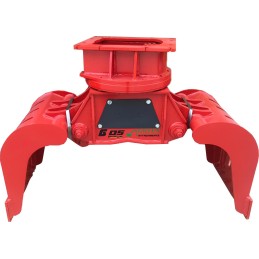
Demolition and Sorting Grapple Demolition and Handling Grapple Yellow G 05 (5…12t) (8 800 – 18 000 lb). Yellow line demolition and handling grapples designed for demolition and recycling applications. Structure of sorting grapple is light but robust which means energy savings and good productivity. Selector grabs for tough work Due to demolition and...
Reference: PB 10
Pilot boom PB for excavators Our range of PB pilot booms are designed for controlled pile installation. There can be a breaker or an auger mounted to the boom. Pilot Boom PB for Excavators is the ultimate solution for precise and efficient pile installation. Whether an auger or a breaker is installed, method of movement is same. There is an unit where...
Reference: Red AGR Pro 035
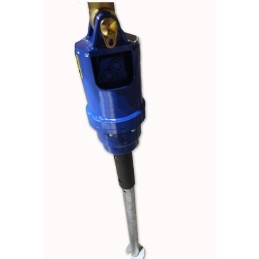
Hydraulic Auger Pro 035 AGR Pro line Hydraulic Augers for (2.0...5.0 t) excavators. AGR Pro hydraulic augers for excavators are designed for drilling holes, augers are an economical, robust solution for professionals. These earth drills can be used everywhere holes are needed by skid steer loaders, tractors, mini excavators, excavators, backhoe – loaders,...
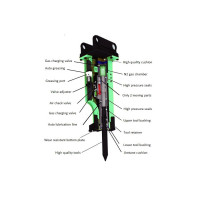
A hydraulic breaker is a powerful attachment for excavators, but its performance depends on several factors. If your hydraulic breaker is not hitting properly, the impact force is weak, the blows are irregular, or the breaker stops working altogether, the problem may not actually be with the breaker itself. In many cases, the cause can be traced to incorrect hydraulic settings, incorrect sizing, worn components, restricted hydraulic flow, or improper operating technique. In this guide, we look at 10 common reasons why a hydraulic breaker is not working properly and what you should check before sending the breaker for service. Important: Hydraulic breaker servicing and pressure adjustments should always be carried out according to the manufacturer's instructions. If you are unsure about the hydraulic system, operating pressures, or flow rates, have the system inspected by a qualified service technician.
1. Hydraulic flow is too low
One of the most common causes of weak hydraulic breaker performance is insufficient hydraulic flow. A hydraulic breaker requires a specific amount of hydraulic oil to operate at its designed impact frequency and power. If the excavator's auxiliary hydraulic flow is too low, the breaker may: Hit too slowly, Produce weak impacts, Operate irregularly, Lose impact power under load
Always check the recommended hydraulic flow range in l/min specified by the hydraulic breaker manufacturer and compare it with the actual auxiliary hydraulic flow available from the excavator. Too much hydraulic flow is not a solution either. Excessive flow can increase hydraulic oil temperature and place unnecessary stress on the breaker and the excavator's hydraulic system.
Solution: Measure the actual auxiliary hydraulic flow and make sure it matches the hydraulic breaker's requirements.
2. Hydraulic pressure is not set correctly
Having sufficient hydraulic flow alone does not guarantee strong breaker performance. The hydraulic operating pressure must also be within the correct range. If the pressure is too low, the hydraulic breaker may not receive enough energy to deliver powerful impacts. If the pressure is too high, the breaker components and excavator hydraulic system may be exposed to unnecessary stress. The correct pressure range depends on the specific hydraulic breaker model.
Solution: Check the operating pressure specified by the manufacturer and measure the actual pressure using suitable test equipment. Never adjust hydraulic pressure simply by trial and error.
3. The excavator and hydraulic breaker are not properly matched
A hydraulic breaker must be correctly matched to both the excavator size and its hydraulic system. A breaker that is too small for a large excavator may not be able to make full use of the machine's hydraulic capacity. On the other hand, a breaker that is too large can place excessive loads on the excavator, hydraulic system and attachment mounting.
When selecting a hydraulic breaker, consider at least:
|
|
Solution: Select the hydraulic breaker based on the excavator's actual hydraulic specifications and operating requirements – not simply by excavator tonnage.
4. Back pressure is too high
The return-line back pressure of a hydraulic breaker is often overlooked. If back pressure on the return side becomes too high, the breaker may operate more slowly and its impact power may decrease. Excessive back pressure can also cause additional heat generation and wear in hydraulic components. Possible causes include:
Solution: Check the return-line pressure and make sure the hydraulic oil can return from the breaker freely and through a correctly sized return circuit.
5. Hydraulic hoses or couplers are restricting flow
Sometimes there is nothing wrong with the hydraulic breaker itself. The problem may be somewhere in the hydraulic hoses, fittings or quick couplers. A damaged, undersized or partially blocked hydraulic hose can restrict oil flow. A faulty quick coupler can also prevent the breaker from receiving sufficient hydraulic power. Check the following carefully:
|
|
Solution: Make sure hydraulic oil can flow freely to the breaker and return to the excavator's hydraulic system without unnecessary restrictions.
6. The hydraulic breaker tool bit is worn
The impact energy produced by a hydraulic breaker is transferred to the material through the breaker tool bit.
A worn, damaged or incorrect tool bit can significantly reduce breaking performance. The breaker may still be producing a normal impact, but the energy is no longer transferred efficiently into the material. Inspect the tool bit regularly for:
Proper lubrication between the tool bit and breaker is also important.
Solution: Replace a worn or damaged tool bit and use the correct tool for the application. Always follow the manufacturer's recommended lubrication procedure and lubricant specifications.
7. The hydraulic breaker is being used at the wrong angle
A hydraulic breaker is designed to work as close as possible to perpendicular to the material being broken. Using the breaker continuously at an angle increases side loads and accelerates wear on both the breaker and tool bit. It can also prevent the impact energy from being transferred efficiently into the material. Applying strong sideways pressure to the tool is particularly likely to cause unnecessary stress.
Solution: Keep the hydraulic breaker as straight as possible in relation to the material being broken and allow the breaker to work without unnecessary side loading.
8. The breaker is being pressed too hard – or not hard enough
Operating a hydraulic breaker does not mean that the full weight of the excavator should constantly be pushed down onto the attachment. Excessive downward pressure can create unnecessary stress on the breaker and excavator. On the other hand, insufficient pressure can result in inefficient operation and blank firing, where the breaker strikes without being properly supported against the material. The correct operating technique depends on the hydraulic breaker model and the material being broken.
Solution: Follow the manufacturer's operating instructions and keep the breaker stable against the material without applying unnecessary downward force.
9. The hydraulic oil is too hot or contaminated
The condition of the hydraulic oil has a direct effect on the performance of the entire hydraulic system. If hydraulic oil becomes excessively hot, its operating properties can change and overall hydraulic system performance may decrease. Contaminated or incorrect hydraulic oil can accelerate wear on hydraulic components. A clogged hydraulic filter can also restrict system performance.
Solution: Check:
If the hydraulic system contains contaminants or the oil has deteriorated, simply adjusting the hydraulic breaker will not solve the underlying problem.
10. The Hydraulic Breaker Needs Servicing
If the hydraulic breaker has been in heavy use for a long time and all other possible causes have been eliminated, the problem may be related to internal breaker components. Wear parts, seals and other hydraulic breaker components can deteriorate over time and gradually reduce performance. Signs that a hydraulic breaker may require servicing include:
Solution: If the hydraulic flow, pressure, hoses, couplers and operating technique are all correct but the breaker still does not perform normally, have the hydraulic breaker inspected by a qualified service professional.
When hydraulic breaker performance has decreased, work through the following checklist systematically:
☐ Check hydraulic flow
☐ Check operating pressure
☐ Confirm compatibility between the excavator and hydraulic breaker
☐ Check return-line back pressure
☐ Inspect hydraulic hoses and quick couplers
☐ Check the condition of the tool bit
☐ Check the working angle
☐ Check operating technique
☐ Check hydraulic oil temperature and condition
☐ Check hydraulic filters
☐ Determine whether the breaker requires servicing
Not every hydraulic breaker problem should be solved by adjusting or repairing an old breaker. If a hydraulic breaker is heavily worn, repair and maintenance costs have become significant, or the breaker no longer meets the requirements of your current excavator or application, it may be worth comparing the available new hydraulic breaker options.
When choosing a new hydraulic breaker, consider at least the following:
1. Excavator size
Choose a breaker that is suitable for the operating weight and specifications of your excavator.
2. Hydraulic Flow
Make sure the excavator's hydraulic system can provide the hydraulic flow required by the breaker.
3. Operating Pressure
The excavator's hydraulic pressure must be compatible with the selected hydraulic breaker.
4. Breaker Weight
The attachment weight must be suitable for both the excavator and the quick coupler being used.
5. Application
Breaking concrete, rock, asphalt and other materials can place different demands on a hydraulic breaker
Search again what you are looking for