


Sorry for the inconvenience.
Search again what you are looking for

Reference: Piikki GA050
Hydraulic Breaker Piikki line hydraulic breaker for 10...15 t excavators. Piikki breakers are hydraulic demolition rock hammer / pecker and they are gas assisted. For many daily applications, excavation assistance, demolition etc. Very simple and reliable structure, cost effective solution you can rely on. The Piikki Series is built for versatility, daily...
Reference: Piikki Pro 250
Hydraulic Rock Breaker Piikki Pro 250 (25...40) 2300 kg Piikki Pro line hydraulic breaker for 25...40 t excavators.. Piikki Pro hydraulic rock breakers are fully hydraulically operated. For mine and quarry applications, excavation assistance, demolition, tunneling, boulder breaking, underwater etc. The membrane type breakers are fully hydraulically...
Reference: Yellow G 05
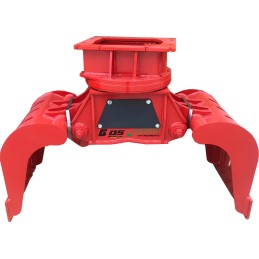
Demolition and Sorting Grapple Demolition and Handling Grapple Yellow G 05 (5…12t) (8 800 – 18 000 lb). Yellow line demolition and handling grapples designed for demolition and recycling applications. Structure of sorting grapple is light but robust which means energy savings and good productivity. Selector grabs for tough work Due to demolition and...
Reference: PB 10
Pilot boom PB for excavators Our range of PB pilot booms are designed for controlled pile installation. There can be a breaker or an auger mounted to the piling rig. Pilot Boom PB for Excavators is the ultimate solution for precise and efficient pile installation. Whether an auger or a breaker is installed to piling rig, method of movement is same. There...
Reference: Red AGR Pro 035
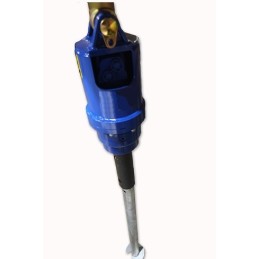
Hydraulic Auger Pro 035 AGR Pro line Hydraulic Augers for (2.0...5.0 t) excavators. AGR Pro hydraulic augers for excavators are designed for drilling holes, augers are an economical, robust solution for professionals. These earth drills can be used everywhere holes are needed by skid steer loaders, tractors, mini excavators, excavators, backhoe – loaders,...
Large tires are difficult to handle. They take up valuable space, are heavy to move, and can be challenging to transport in one piece. Cutting them into smaller sections with an excavator-mounted hydraulic shear makes them easier to handle, transport, store, and prepare for recycling.
A hydraulic shear brings powerful cutting performance directly to where the tires are located. Whether you work at a recycling facility, construction site, mine, or industrial site, an excavator-mounted attachment allows you to process tires on-site without transporting them to a separate cutting line.
End-of-life tires contain materials that can be recovered and reused when properly processed. Cutting is often an important first step in the recycling process. Once a tire has been cut into smaller sections, the material becomes easier to:
The larger the tire, the greater the potential benefits of mechanical cutting. Mining tires and tires used on heavy machinery can be particularly difficult to handle with conventional tools, making suitable hydraulic cutting equipment a practical solution.
Tire Recycling Facilities
Cutting end-of-life tires into smaller sections is a common part of tire recycling operations. An excavator equipped with a suitable hydraulic shear provides an efficient way to handle tires before further processing.
Mining and Industrial Sites
Large tires used on mining equipment and industrial machinery require powerful equipment and durable attachments. A hydraulic shear allows tires to be cut where they are located, reducing the need to move oversized tires to a separate processing area.
Heavy Equipment Maintenance and Service
When large tires are removed from heavy machinery, they must be handled and transported safely. With a properly prepared work area and suitable cutting equipment, tire sections can be processed in a controlled manner.
Demolition and Recycling Sites
For contractors, a versatile attachment can offer advantages over equipment used for a single task. In addition to suitable tire-cutting applications, the same hydraulic shear can be used to cut steel structures, pipes, profiles, and scrap metal, depending on the material and model.
Yellow S Hydraulic Shears for Tire Cutting
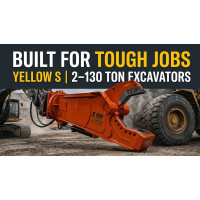
Green Attachments' Yellow S series hydraulic shears are designed for demanding metal cutting, demolition, and recycling applications. They can also be used for cutting tires and other rubber materials when the specific tire type, construction, and operating conditions are suitable.
The right model depends on the excavator, tire dimensions, tire construction, and the intended cutting application. Contact Green Attachments to discuss your requirements.
A hydraulic shear is not limited to tire processing. Depending on the model and material, the same attachment can also be used for cutting:
For contractors and recycling operators, a versatile attachment can provide more value throughout the year than equipment used for tire cutting alone.
The excavator's operating weight is only one factor to consider when selecting a hydraulic shear. The following points are also important.
Always confirm that the selected shear is suitable for the specific tire type and application. Not every model is suitable for every tire.
For more advice, read our blog article: How to Choose the Right Excavator Attachment?
Cutting heavy tires requires careful risk assessment and appropriate working procedures. Tires may move unexpectedly, and their construction can contain tensioned components and steel reinforcement.
Can you cut tires with an excavator?
Yes. An excavator-mounted hydraulic shear can be used to cut tires into smaller sections at a recycling facility or on-site, provided the attachment is suitable for the tire's size and construction and the work is carried out using appropriate safety procedures.
Which excavators are compatible with Yellow S hydraulic shears?
The Yellow S series includes models for excavators in the approximately 2–130 tonne range. Compatibility depends on the excavator's specifications, hydraulic capacity, mounting arrangement, and intended application. Tell us your excavator's make and model, and we can help identify a suitable option.
Can the same hydraulic shear cut metal as well as tires?
Yes. Depending on the model and material, Yellow S shears can be used to cut steel pipes, profiles, sheets, structures, and scrap metal. Suitability for tire cutting and other materials should always be confirmed for the specific application.
How do I choose the right hydraulic tire cutter?
Consider the tire's dimensions and construction, the excavator's operating weight, hydraulic flow and pressure, attachment weight, and working conditions. The required cutting capacity and the intended recycling process should also influence the selection.
Looking for a hydraulic shear for tire cutting and recycling? Tell us what types of tires you process and which excavator you use. The Green Attachments team will help you identify a suitable Yellow S model for your application.
Green Attachments Oy
Phone: +358 45 697 1644
Email: sales@greenattachments.com
Explore our Yellow S hydraulic shears or contact our team to discuss your requirements.
Search again what you are looking for